Cannabis Skull Vintage SVG: A Designer's Review
As someone who spends more time staring at stitch maps than most people spend looking at their phones, I approach every new digital embroidery file with a mix of curiosity and skepticism. The market is flooded with graphics that look fantastic on a screen but turn into a tangled mess of thread breaks and puckering once they hit the hoop. Recently, I got my hands on the Cannabis Skull Vintage SVG T-Shirt design to evaluate its potential for real-world application. This isn't just about whether it looks cool; it's about whether it can survive the rigors of a commercial embroidery project and deliver value to a small business owner or hobbyist.
The Visual Vibe: Edgy Yet Approachable
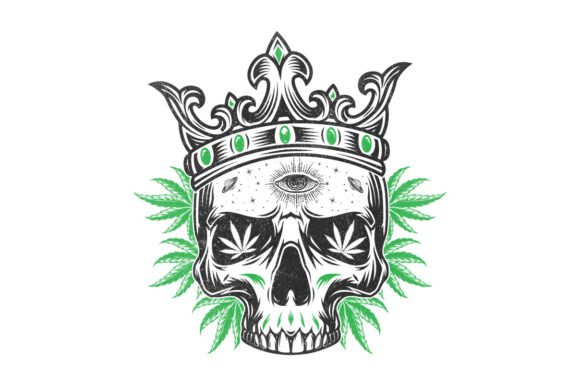
The first thing that strikes you about this design is its mood. It strikes a perfect balance between counter-culture edge and vintage charm. The skull motif is a staple in the tattoo and biker worlds, but pairing it with cannabis elements and a "vintage" aesthetic softens the blow, making it suitable for a wider audience than you might expect. The layout feels organic, avoiding the rigid symmetry that often makes machine embroidery look robotic.
From a Crafts and Graphics perspective, the fact that this is built from 100 vector shapes is a significant plus. In the world of design assets, scalability is king. Whether you are resizing this for a tiny pocket logo on a denim jacket or expanding it for the back of a hoodie, the vector foundation suggests clean lines that shouldn't degrade. However, as an embroiderer, I know that what works in AI or EPS format doesn't always translate perfectly to thread without careful digitizing adjustments.
Real-World Application: The Boutique Sweatshirt Test
To truly test the Cannabis Skull Vintage SVG T-Shirt, I imagined a specific scenario: a local boutique owner looking to launch a limited-run streetwear collection. They need a custom apparel piece that stands out at a craft fair but also holds up to frequent washing. I visualized this design stitched onto a heavy-weight, heather grey French terry sweatshirt.
In this context, the design shines. The vintage aesthetic pairs beautifully with the slightly textured surface of the fleece. If executed with a mix of satin stitch for the outlines and a well-balanced fill stitch for the larger areas of the skull and leaves, the result would be tactile and premium. The contrast potential here is high; imagine using a muted sage green for the cannabis elements and an off-white or bone color for the skull against the grey fabric. This color palette would elevate the handmade product from a simple graphic tee to a curated fashion item.
For an Etsy seller, this versatility is gold. You aren't just selling a shirt; you are selling a vibe. This design could easily transition from a tote bag design for a music festival to an embroidered patch sewn onto a canvas backpack. The visual personality is strong enough to carry the product without needing excessive embellishment.
Navigating Fabric and Hoop Challenges
While the design has potential, practical execution requires caution. The description notes that the file is resizable, but we must respect the limits of our machines and materials. If you are attempting this on a stretchy fabric like a thin cotton jersey, you need to be wary of distortion. Skulls often have detailed eye sockets and nasal cavities; if the stitch density is too high in these small areas, the fabric will pucker, ruining the finished product.
Furthermore, consider the hoop size. While the vector nature allows for scaling, your physical hoop does not. If you plan to use this for baby embroidery on a onesie, you will need to scale it down significantly. At smaller sizes, fine details like the teeth or the veins in the leaves might merge together. In such cases, simplifying the design or opting for a running stitch outline instead of dense fills might be necessary to maintain clarity.
Curved surfaces present another hurdle. Applying this to a cap is a popular choice for this genre, but the front panel of a hat is unforgiving. The center of the skull needs to align perfectly with the seam, and the density must be managed to prevent the cap from warping. Always use a sturdy stabilizer—likely a cut-away for stretchy knits or a heavy tear-away for wovens—to ensure the design lays flat.
Commercial Viability and Brand Trust
For those running a craft business, the quality of your machine embroidery design directly impacts customer trust. A sloppy stitch-out tells a customer you don't care about quality. The Cannabis Skull Vintage SVG T-Shirt has the makings of a high-value item, provided the digitizing matches the vector quality.
When selling personalized gifts or holiday embroidery items, presentation is everything. This design works exceptionally well for mockups. Because it is a vector-based graphic originally, creating printable mockups for your online store before you even stitch a single thread is easy. This allows you to test color combinations digitally—perhaps trying a monochrome black-on-black look for a subtle, sophisticated small shop product.
However, a word of caution on licensing and file types. The product description mentions receiving AI, EPS, SVG, and PNG files. As an embroidery professional, I must remind you that these are graphic formats, not native embroidery machine formats (like PES, DST, or JEF). Unless the seller explicitly states that an embroidered version is included, you may need to digitize this yourself or hire a digitizer to convert these vectors into a stitch file. This is a crucial step for any commercial embroidery venture. Do not assume the SVG will open directly in your embroidery software as a ready-to-stitch file without checking the conversion requirements.
Final Verdict for Makers
The Cannabis Skull Vintage SVG T-Shirt is a compelling asset for the right creator. It fits naturally into the current trends of vintage revival and botanical themes. Its strength lies in its adaptability across various fabrics textures and product types, from kitchen towels to pillow covers.
Before committing to a production run, I strongly advise testing the design on scrap fabric that matches your final material. Check the thread color contrast, especially if working on dark fabrics where the skull needs to pop. Inspect the small details under magnification to ensure no tiny islands of fabric are left unsupported by stitching. If you take the time to respect the technical limitations of embroidery while leveraging the artistic strengths of this graphic, you can create a finished product that customers will love and wear with pride.