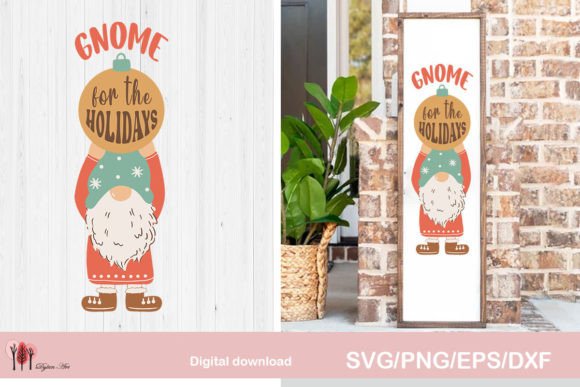
Gnome for the Holidays SVG PNG: A Designer’s Review
As an embroidery designer who spends more time staring at digitized files than I care to admit, I have developed a keen eye for what makes a machine embroidery design truly viable. It is not just about whether the image looks cute on a screen; it is about how those lines translate into thread, how the fabric reacts under the needle, and ultimately, whether the finished product holds up to customer scrutiny. Recently, I evaluated Gnome for the Holidays SVG PNG, a digital asset that promises versatility across various crafting mediums. Here is my practical assessment of how this design performs in real-world scenarios, specifically for those of us running a craft business or creating personalized gifts.
First Impressions: Mood and Visual Personality
The first thing that strikes you about Gnome for the Holidays SVG PNG is its inherent charm. It captures that cozy, whimsical spirit associated with winter holidays without feeling overly cluttered. For an embroidery project, simplicity is often key. Complex illustrations can turn into a nightmare of thread breaks and puckering if not digitized perfectly. This design, however, appears to strike a balance between detail and clarity. The shapes are distinct, suggesting that the underlying vector paths are clean. This is crucial because clean paths mean smoother stitching, whether you are using a satin stitch for borders or a fill stitch for larger areas.
The mood is undeniably festive but understated. It does not scream for attention; rather, it invites a closer look. This subtle approach is ideal for modern handmade products where customers often prefer minimalist aesthetics over loud, traditional holiday graphics. When I visualized this on a neutral-toned tote bag or a cream-colored sweatshirt, the design felt like a natural extension of the garment rather than an afterthought.
Real-World Application: From Screen to Stitch
To truly test the viability of any embroidery file, you must imagine it on actual products. I considered several common applications for small shop owners and Etsy sellers. The most immediate candidate was a custom embroidered tote bag. Tote bags are staples in the craft fair circuit, and a holiday-themed gnome adds significant seasonal appeal. Given the likely dimensions of the design, it would sit comfortably in a standard 5x7 or 6x10 hoop, making it accessible for most home embroidery machines.
Another strong contender is sweatshirt embroidery. Holiday sweaters are a massive market segment. Placing this gnome on the left chest area of a high-quality fleece or cotton blend creates a boutique feel. The design’s structure suggests it would hold up well on textured fabrics, provided the correct stabilizer is used. For baby embroidery, such as on a onesie or a soft blanket, the design’s friendly nature is a perfect fit. However, one must be cautious with scale. If the design includes tiny details, they might get lost or become stiff on delicate baby fabrics. Scaling down requires careful attention to stitch density to ensure the fabric remains soft.
I also considered its use as an embroidered patch. Patches are trending, and this graphic could easily be turned into a merit-badge-style accessory for jackets or hats. The clear outlines would define the patch edges nicely, allowing for a clean cut-and-sew or iron-on application.
Navigating Technical Challenges
While Gnome for the Holidays SVG PNG shows promise, there are areas where a designer must exercise caution. Any experienced embroiderer knows that curved surfaces, like caps, present unique challenges. If you plan to use this design on a hat, you must ensure the digitizing accounts for the curvature. Distortion can occur if the design is too wide or if the stitch pull is not compensated for. I recommend testing on a scrap piece of similar fabric before committing to a final product.
Fabric texture and color also play pivotal roles. On dark fabrics, thread color contrast becomes critical. If the design relies on subtle shading, it might disappear against a black or navy background. In such cases, using a lighter thread palette or adding a white underlay can help the design pop. Conversely, on thin or stretchy fabrics, high stitch density can cause puckering. It is essential to review the stitch count and density settings in your embroidery software. If the file allows for editing, reducing the density slightly can improve the drape of the finished product.
Small details are another potential pitfall. If the gnome features tiny elements like buttons or facial features, these need to be large enough to stitch cleanly. Tiny lettering or intricate corners can result in thread bunching. I advise inspecting the design at 100% zoom in your software to identify any potential trouble spots before hooping.
Enhancing Brand Value and Customer Trust
For commercial embroidery projects, the quality of your design assets directly impacts your brand consistency. Using a well-structured file like Gnome for the Holidays SVG PNG contributes to a professional finish. Customers associate neat, crisp stitching with high value. A sloppy embroidery job can undermine trust, regardless of how cute the design is. By choosing a design that translates well into thread, you are investing in your reputation.
This design also offers excellent giftability. Personalized gifts are a huge driver for holiday sales. Imagine combining this gnome motif with a customer’s name in a complementary font. The result is a unique, custom apparel item that feels special. For Etsy sellers, having versatile design assets allows for quick creation of printable mockups. You can showcase the design on various products—mugs, stickers, necklaces—as mentioned in the product description, expanding your marketing reach without needing to physically produce every item immediately.
Practical Notes for the Embroidery Designer
Before you launch into production, here are some actionable steps to ensure success with this digital embroidery file:
- Test on Scrap Fabric: Always run a test stitch-out on the same type of fabric you intend to use for the final product. This reveals issues with tension, density, and registration.
- Check Thread Color Contrast: Experiment with different thread palettes. Sometimes, a monochromatic look works best, while other times, vibrant colors are needed to highlight specific features of the gnome.
- Review Stitch Density: If you have access to the source file, check the density. High density may require a heavier stabilizer, while low density might need a backing to prevent show-through.
- Confirm Hoop Size: Ensure the design fits within your machine’s maximum hoop size. If it is too large, you may need to split the design or scale it down, which could affect detail clarity.
- Inspect Small Details: Zoom in on intricate parts. If details are too small, consider simplifying them or removing them entirely for smaller applications.
- Use Proper Stabilizer: Match your stabilizer to your fabric. Cut-away stabilizers are generally better for stretchy fabrics like t-shirts, while tear-away works well for stable woven fabrics like tote bags.
- Verify Licensing: Since this is a commercial asset, confirm the license terms. Ensure you are allowed to sell finished items featuring this design. Most SVG/PNG bundles allow for physical product sales, but digital resale is usually prohibited.
Final Verdict
In the realm of Crafts and Graphics, finding a design that balances aesthetic appeal with technical feasibility is rare. Gnome for the Holidays SVG PNG stands out as a solid choice for embroidery designers and makers. It offers the flexibility needed for diverse applications, from holiday embroidery on kitchen towels to custom apparel for boutique branding. While it requires the usual due diligence regarding fabric choice and stabilization, its clean lines and charming theme make it a valuable addition to any design library. For those looking to elevate their handmade product offerings this season, this design is worth considering. Just remember, the magic lies not just in the file, but in how carefully you execute the stitch.